One Platform to Manage Assets, Inspections, Work Orders, and Compliance Across Your Portfolio.
Linq helps enterprise teams capture trusted asset data, standardize inspections, manage work orders, and maintain compliance documentation across complex facilities and multi-site operations. From field data collection to executive reporting, Linq gives your teams one connected system for operational visibility, accountability, and better decision-making.
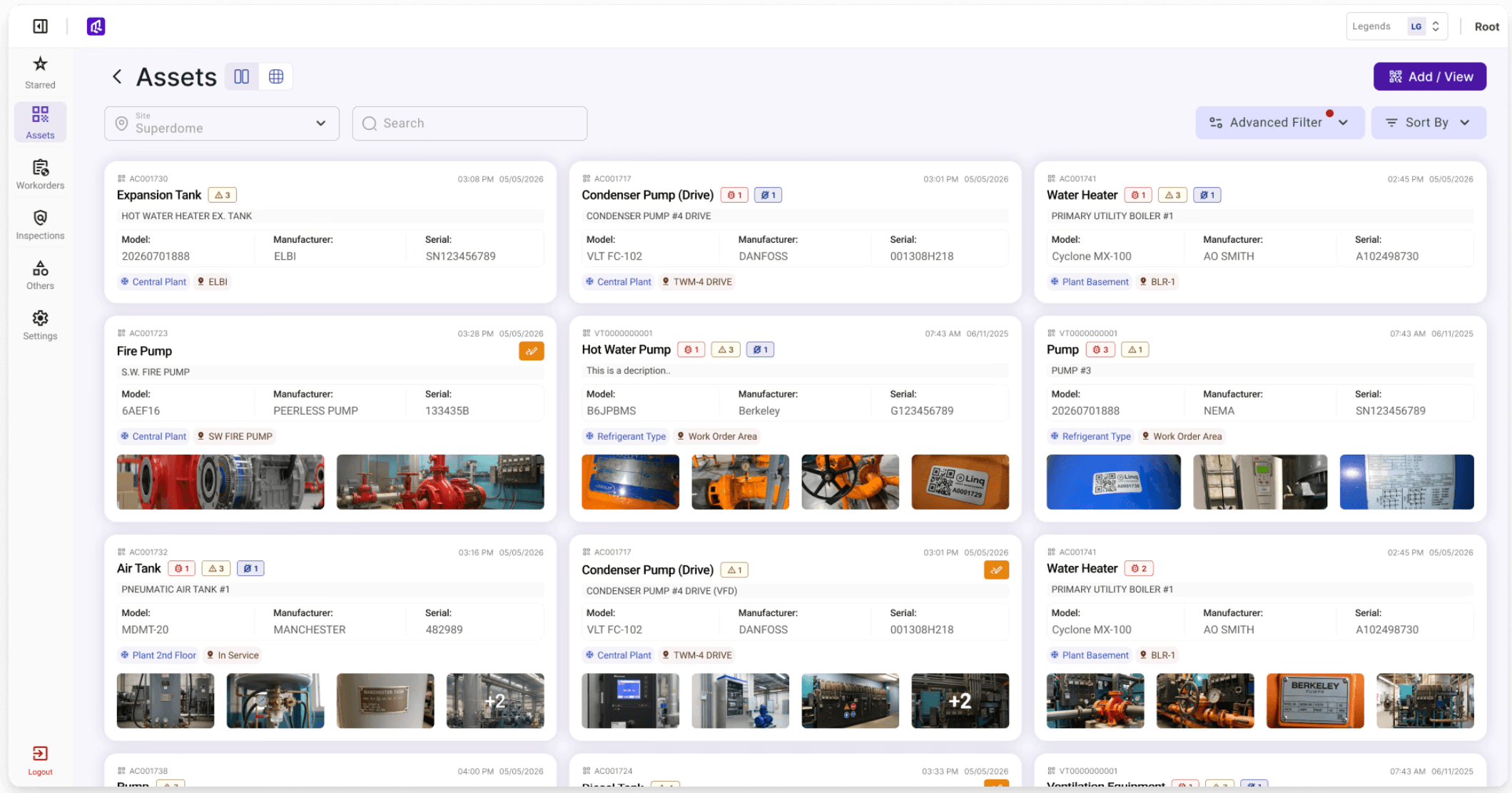
Built for organizations that manage critical assets, regulated operations, and large facility portfolios.
Linq is designed for corporate campuses, healthcare facilities, retail portfolios, stadiums, industrial sites, commercial properties, and multi-site enterprise operations.
























The Problem Linq Solves
Turn Disconnected Field Data Into Trusted Operational Records
Enterprise teams often manage assets, inspections, work orders, and compliance records across spreadsheets, legacy CMMS platforms, paper forms, emails, and disconnected field processes. This creates missing data, inconsistent records, limited visibility, and weak documentation when leadership, auditors, or operations teams need answers.
Platform Modules
Built for the way facility, asset, and compliance teams actually work.
Linq brings asset management, inspections, work orders, compliance workflows, documentation, dashboards, and integrations into one connected platform. Each module can be used independently or connected as part of a larger enterprise operating system.
Built for Enterprise-Level Operations
Scalable software for complex facilities, large asset portfolios, and mission-critical operations.
Linq is designed for organizations managing high asset volumes, multiple locations, field teams, compliance requirements, and connected operational systems. The platform helps enterprise clients standardize asset data, streamline inspections and work orders, improve compliance visibility, and strengthen reporting across the organization.
Support one location, hundreds of sites, or a growing enterprise portfolio with configurable workflows, standardized data structures, and centralized reporting.
Capture via an app, validate, and manage large asset inventories across buildings, systems, departments, and regions with cleaner records and stronger visibility.
Connect Linq with existing CMMS, BMS, reporting, compliance, and operational systems without forcing a full rip-and-replace approach.
Give leadership clear visibility into asset status, inspection results, work order activity, compliance readiness, and operational risk across the organization.
Technology & Integrations
Two-Way Data Integration with Enterprise CMMS Platforms.




Data Validation Before Sync
Linq helps validate asset and field data before it flows into connected systems, reducing incomplete records, inconsistent formats, duplicate entries, and downstream reporting issues.
No Rip-and-Replace Required
Linq works with your current systems and workflows, helping teams improve operations without starting over.
Secure, Controlled Access
Role-based access helps ensure the right users can access the right information while maintaining accountability across teams, departments, and locations.
Real-Time Operational Visibility
Dashboards and reports give teams visibility into asset status, inspection results, work order activity, compliance readiness, and operational risk.
Linq gives your team one trusted place to manage every asset, from first field scan to final retirement. Cleaner data. Fewer surprises. Better control.
Frequently asked questions