Clean Data for the Systems Your Team Already Uses
Linq helps enterprise teams collect, validate, clean, and synchronize asset and field data between Linq, legacy CMMS platforms, ServiceChannel, Corrigo, and other operational systems.
Whether your data starts in the field, inside an existing CMMS, or across disconnected spreadsheets, Linq uses structured workflows and fault detection logic to identify missing, incomplete, inconsistent, or incorrect records before that data flows back into the systems your team depends on.
The result is cleaner asset records, better work orders, fewer manual corrections, and more confidence in the data driving your operations.
The Problem Linq Solves
Bad Data Makes Good Systems Hard to Trust
Most enterprise teams already have systems in place: ServiceChannel, Corrigo, a legacy CMMS, spreadsheets, or internal work order tools. The problem is rarely the system itself; it's the quality of the data moving through it. Incomplete asset records, inconsistent naming, missing serial numbers, field submission errors, and duplicate records create operational confusion, forcing teams to manually correct entries, question reports, and make decisions on data they don't fully trust. Linq Clean Data acts as a data quality layer between the field, your existing CMMS, and the systems that depend on accurate asset information.
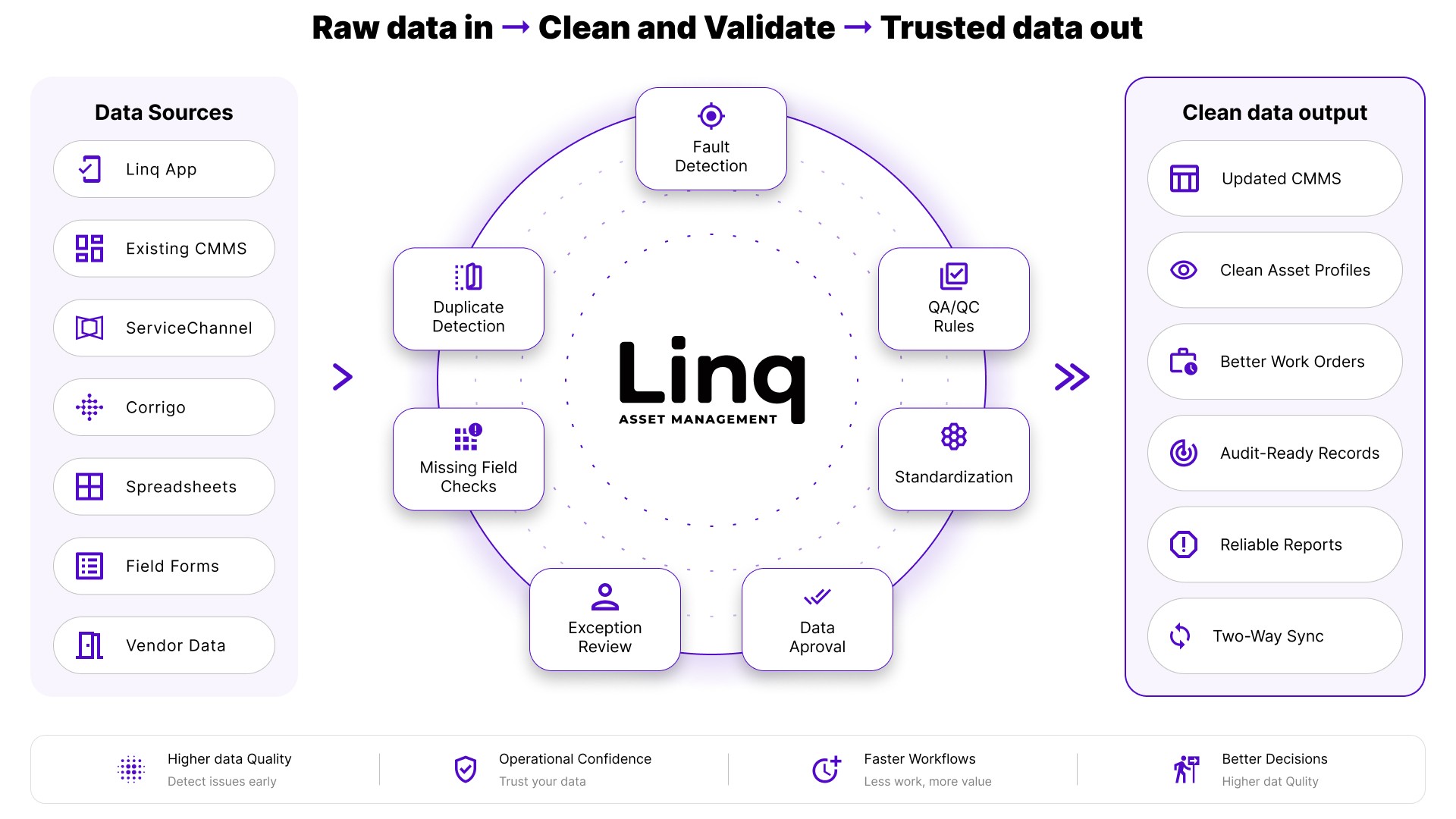
Linq Turns Field Data Into Trusted Operational Data
Linq can collect data from the field through the Linq app, receive data from an existing CMMS, run it through configurable fault detection and QA/QC rules, and then push clean, validated data back into platforms such as ServiceChannel, Corrigo, or other integrated systems.
This gives your organization a practical way to improve data quality without forcing every team to abandon the systems they already use.
Two-Way Integration
work order systems for seamless workflow processes.
Asset-First Work Order Creation
Create work orders directly from asset records for improved accuracy and efficiency.
Automated Data Synchronization
Automatically synchronize asset data between Linq and other systems for enhanced data consistency.
Enhanced Reporting and Analytics
Leverage integrated data for comprehensive reporting and analytics, offering deeper insights into asset utilization and performance trends.
How it works
Core Capabilities
Field Data Collection Through the Linq App
Field teams can use the Linq app to collect asset data, scan QR codes, capture photos, complete forms, and submit updates directly from the field.
Automated Data Quality Checks
Linq checks submitted data for missing fields, duplicates, invalid responses, inconsistent formats, and incomplete asset records before it moves downstream.
Fault Detection for Asset and CMMS Data
Linq can flag data issues such as missing serial numbers, incorrect locations, mismatched equipment types, incomplete inspections, or work orders not tied to an asset.
Two-Way CMMS Integration
Linq can sync data with systems such as ServiceChannel, Corrigo, and other CMMS platforms so records stay connected across systems.
Clean Asset Records
Linq helps standardize asset names, locations, types, photos, QR codes, service history, and key equipment details so teams can trust the data.
Exception Review Workflow
Questionable records can be flagged for review, corrected by approved users, and verified before being pushed back into another system.
Reporting and Visibility
Linq gives teams visibility into data quality, incomplete records, corrected issues, and locations that may need additional field validation.
Where Clean Data Matters Most
Frequently asked questions
Get the answers you need to move forward
Can Linq clean data from an existing CMMS?
Yes. Linq can receive data from existing CMMS platforms, identify data quality issues, help standardize records, and synchronize corrected information back into connected systems where supported.
Can Linq work with ServiceChannel and Corrigo?
Can Linq collect data from the field?
What does the fault detection module check?
Does Linq replace our CMMS?